
Hello everyone who reads our blog. This is Yabiku from FLAGSHIP STORE.
Today, I'd like to introduce the FRENCH WORK JACKET & PANT, which has undergone numerous updates over the years.
With its refined quality achieved through changes in shape and materials, please enjoy reading about its charm to the end.
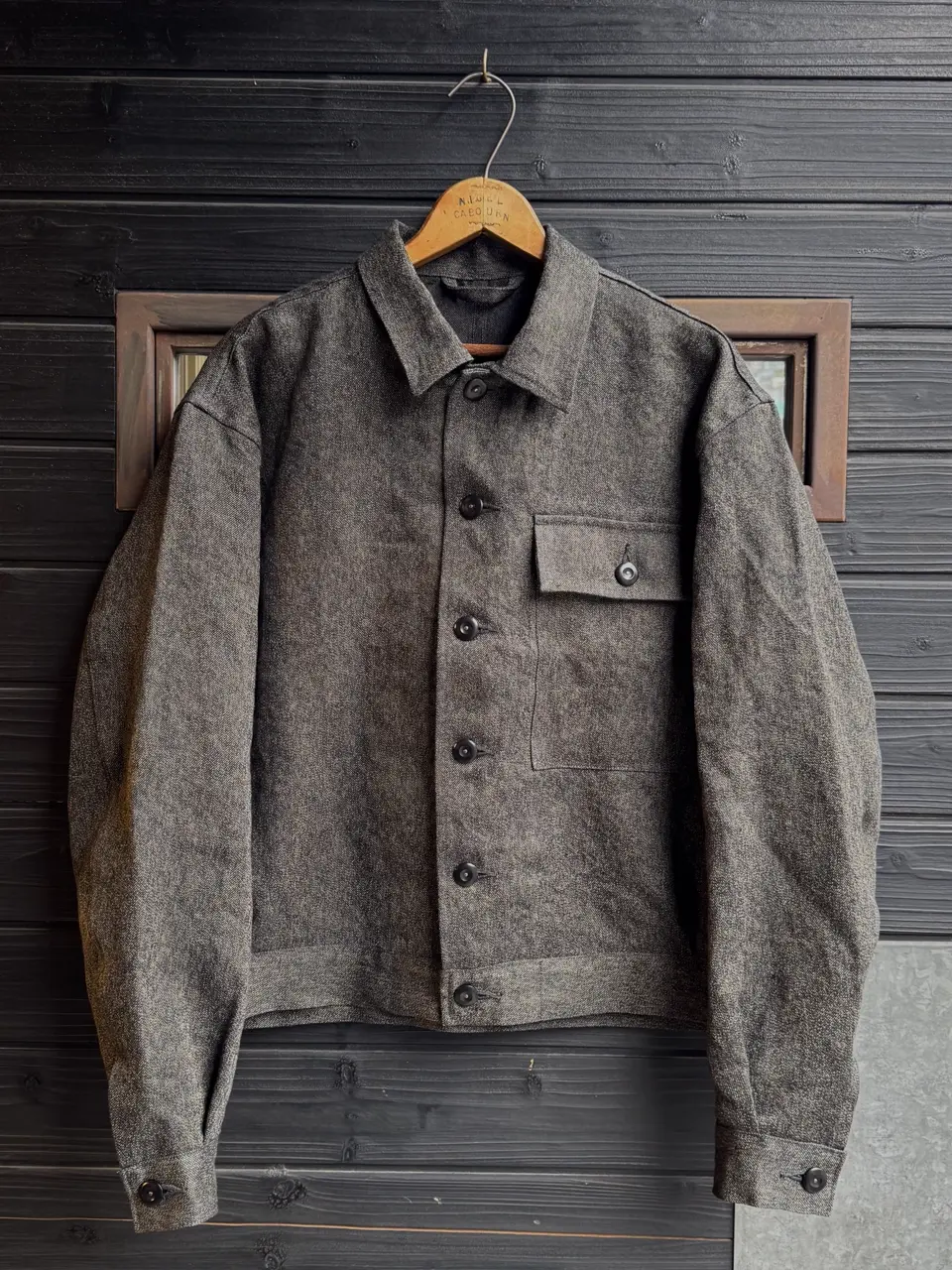
This product is a reinterpretation based on a 1940s French work jacket. It is modelled after jackets worn by mechanics and other workers of that era. While retaining the functional details that eliminate unnecessary elements and the practical design that prioritises workability, it strongly reflects the atmosphere of the time. The fabric used is chambray, which combines lightness and durability.
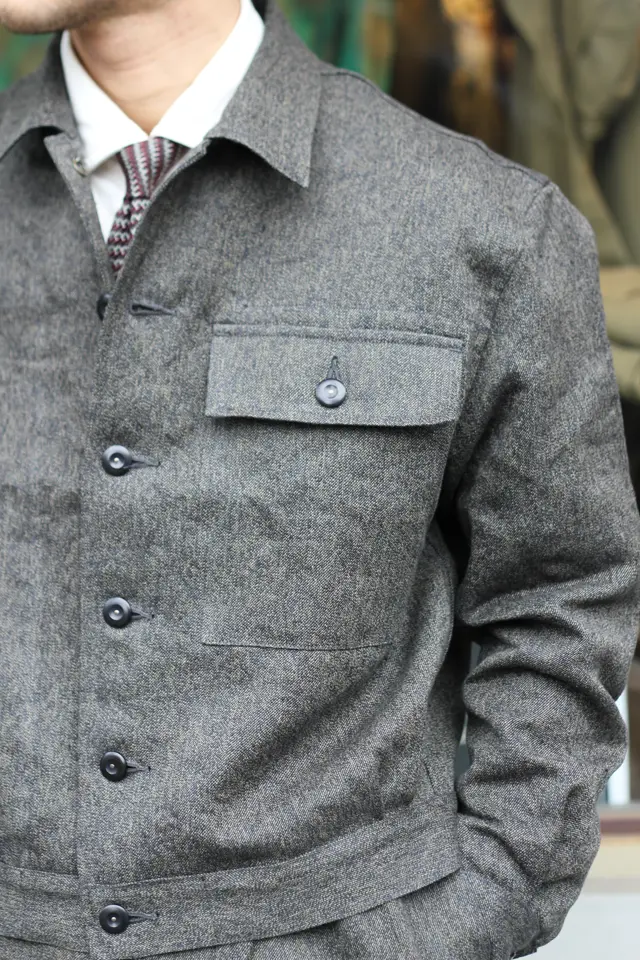
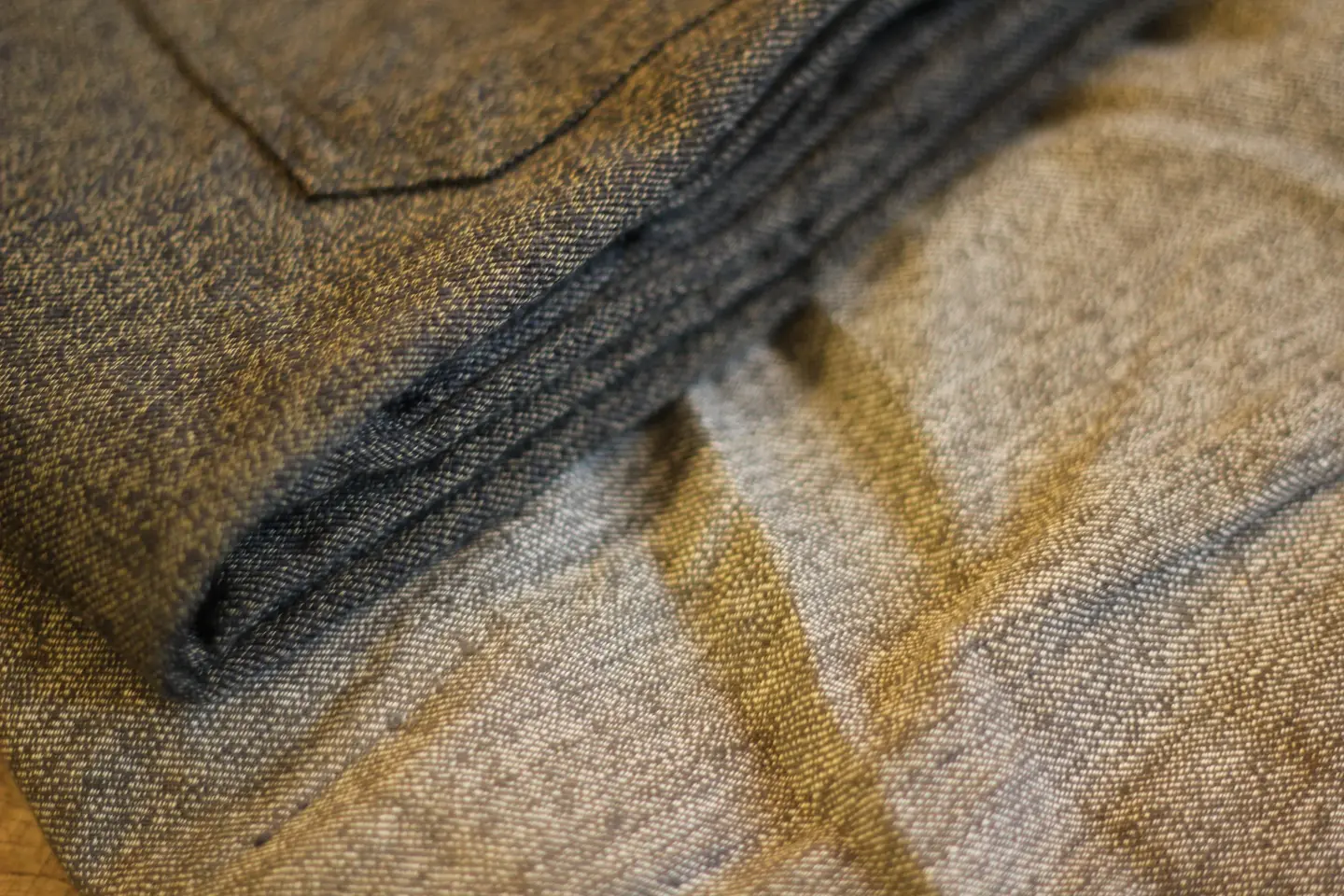
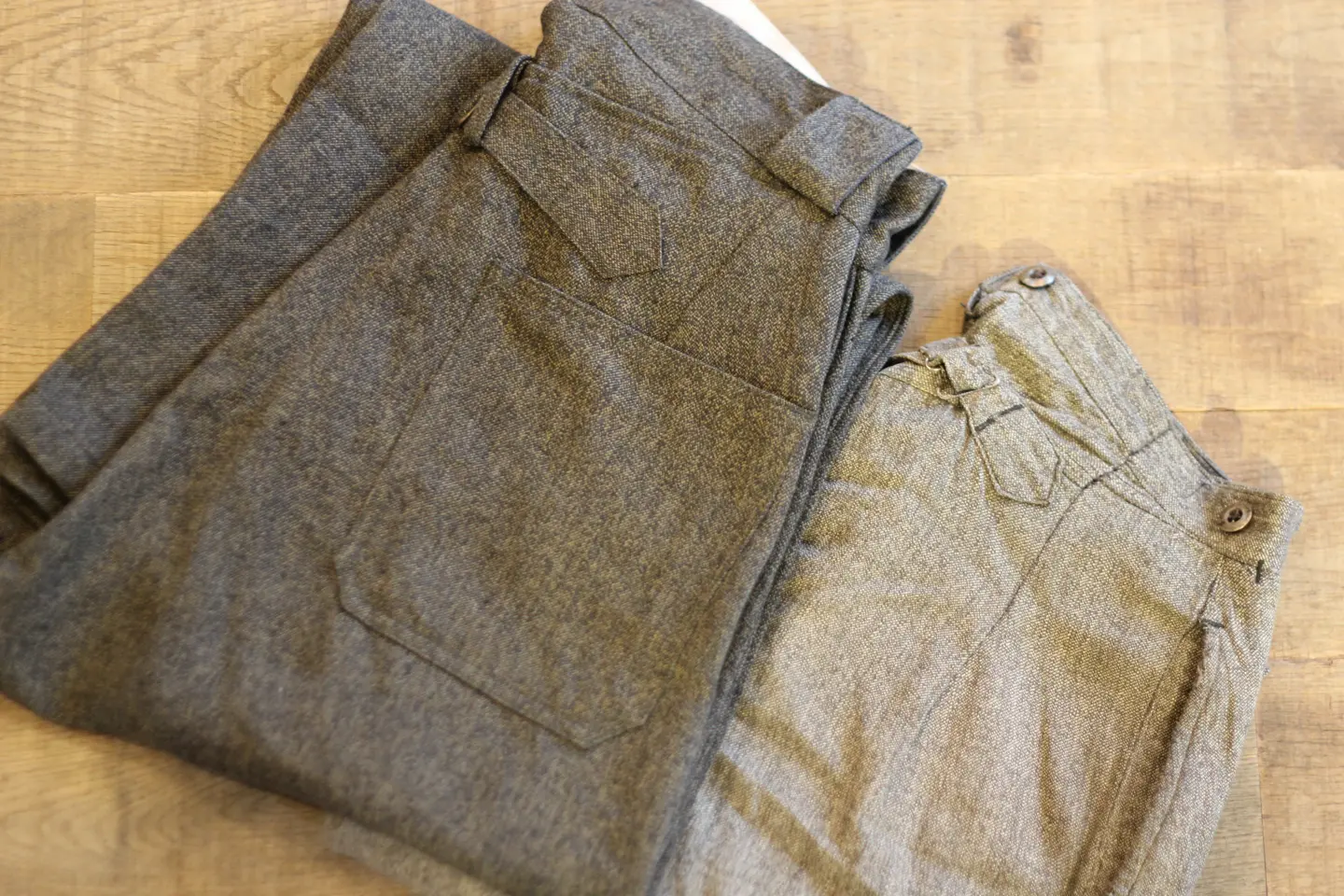
Left: Wide French work pants. Right: Personal chambray pants (1930s).
■ Chambray fabric
Q. Do you know where chambray fabric originated?
A. Surprisingly, many people mistakenly believe it originated in Europe, not America.
→ After becoming popular in Europe, denim and chambray began to be used as workwear fabrics with the advent of the American Industrial Revolution.
Regular chambray fabric is made by combining coloured and white threads in a plain weave. Even vintage pieces share this basic structure.
On the other hand, Nigel Cabourn's fabric replaces the white threads with "olive khaki" colour and adds its own unique blend to create a deeper, richer look.
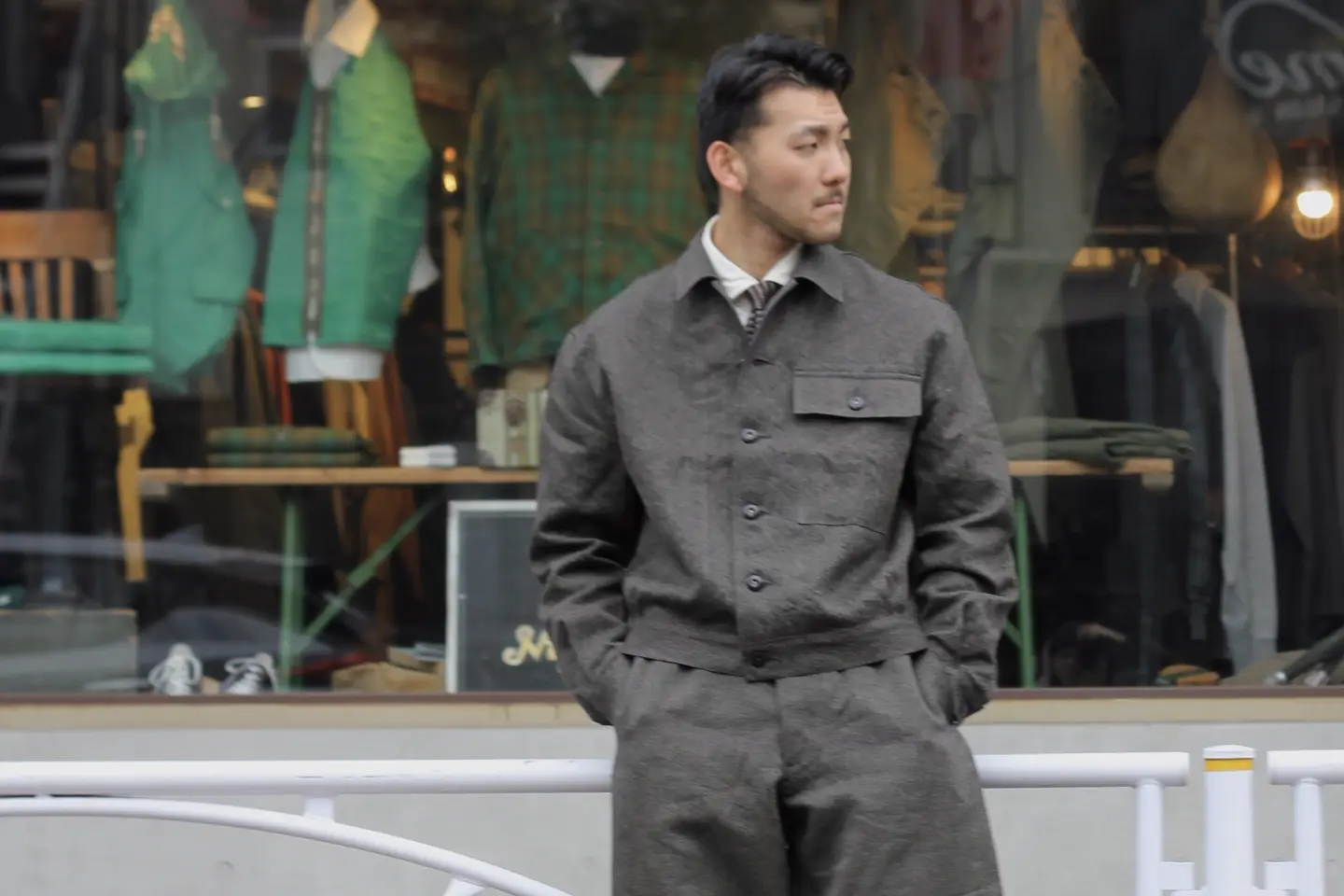
[Fun Fact] American Chambray ⇒ Indigo Colour
European Chambray ⇒ Black or Gray
Why do the colours differ by region? While the common goal is to conceal stains, there are other reasons.
In America, indigo dye was widely available, and above all, there was a culture of enjoying the fading that occurs as the garment is worn. In Europe, on the other hand, as shown in the photo on the right (a pair of chambray pants from the 1930s), black which hides stains the least, was the base colour.
I think this is related to a difference in mindset: rather than enjoying the aging process, the focus is on "caring for and wearing the garment in the same condition for a long time while making repairs."
In contrast to the fading of indigo dye as it ages, salt-and-pepper chambray deepens in character and richness the more it is worn. This quiet transformation is the charm of this fabric.
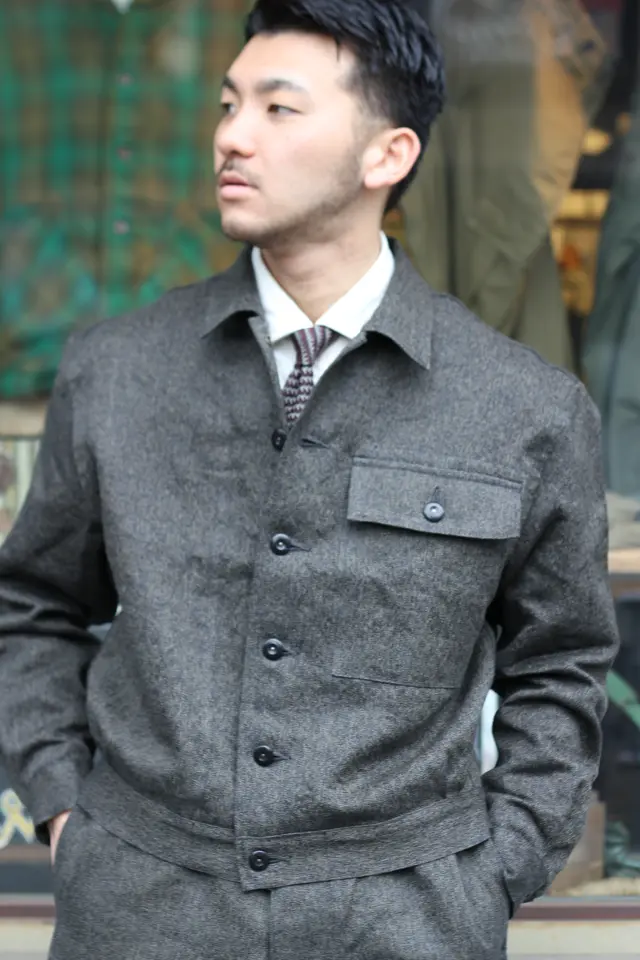
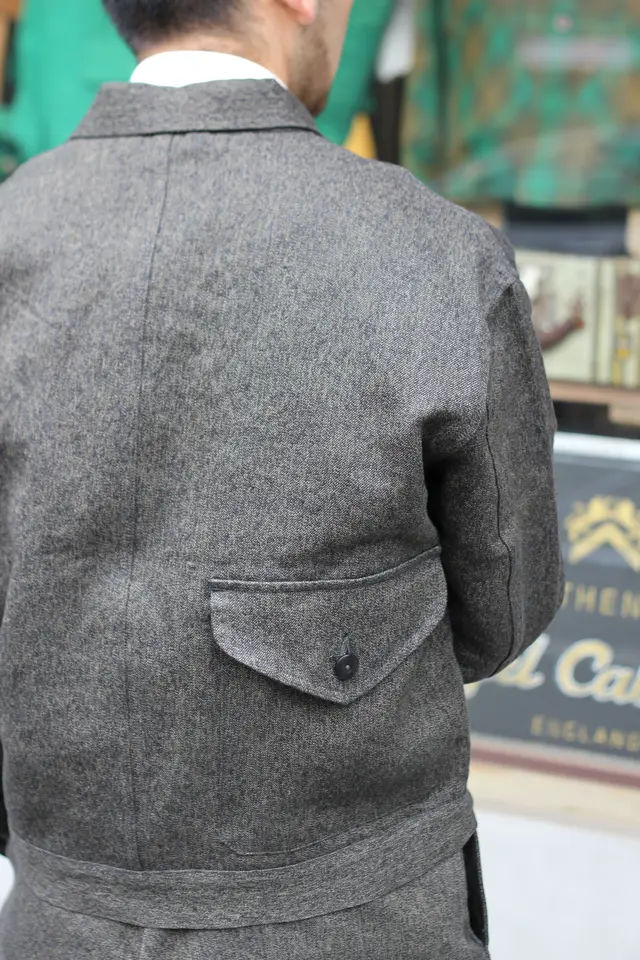
This short-length work jacket, born from a pursuit of work efficiency, boasts a streamlined design.
Its rational construction led to its later use as a sports jacket (cyclist jacket), demonstrating its superior functionality. The back features a map pocket, a design element found on British Army battle dress pants.
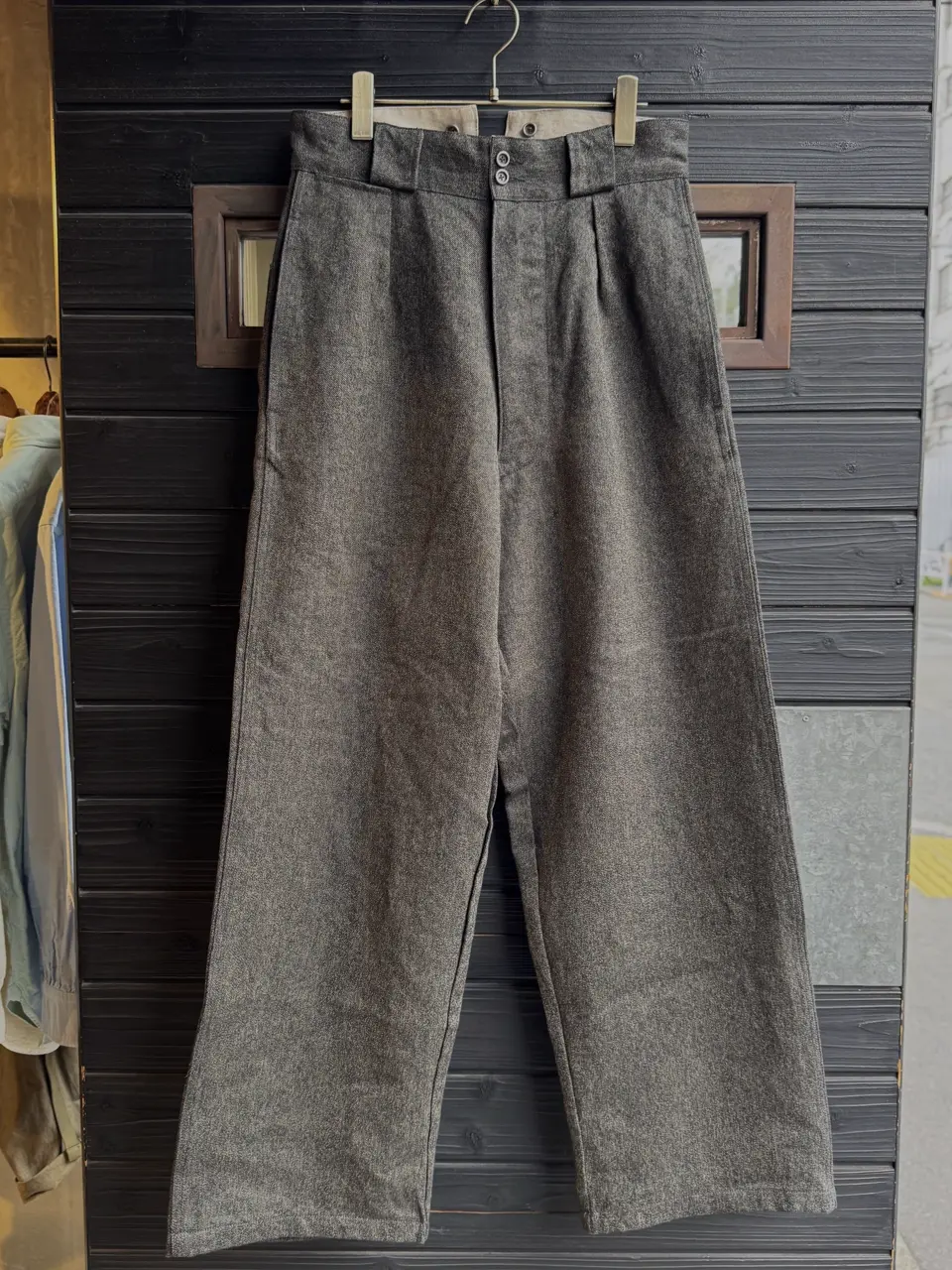
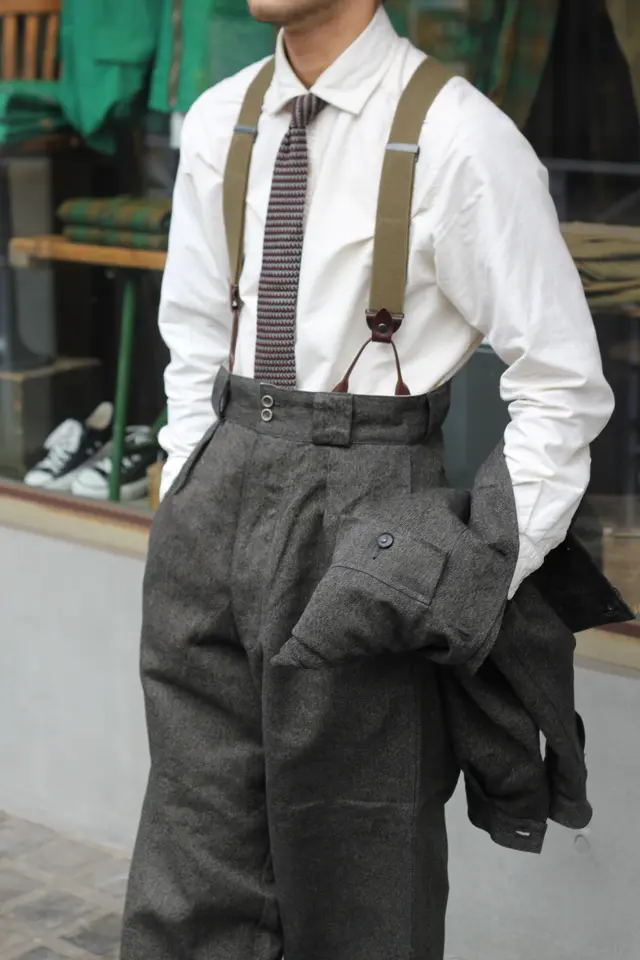
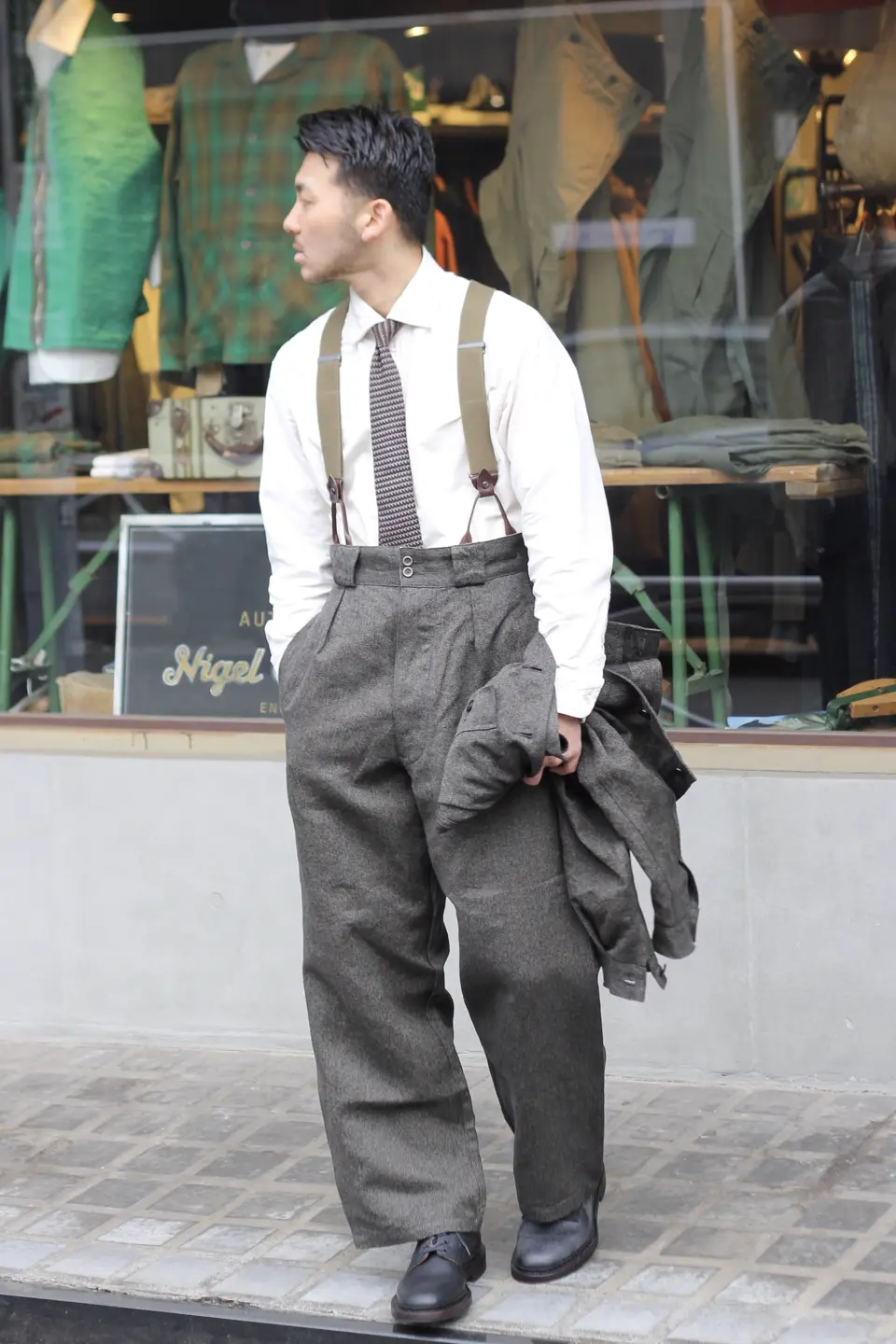
This product is inspired by French work pants from the 1930s and 40s. It also uses black chambray fabric. These wide pants make you want to wear them with suspenders!
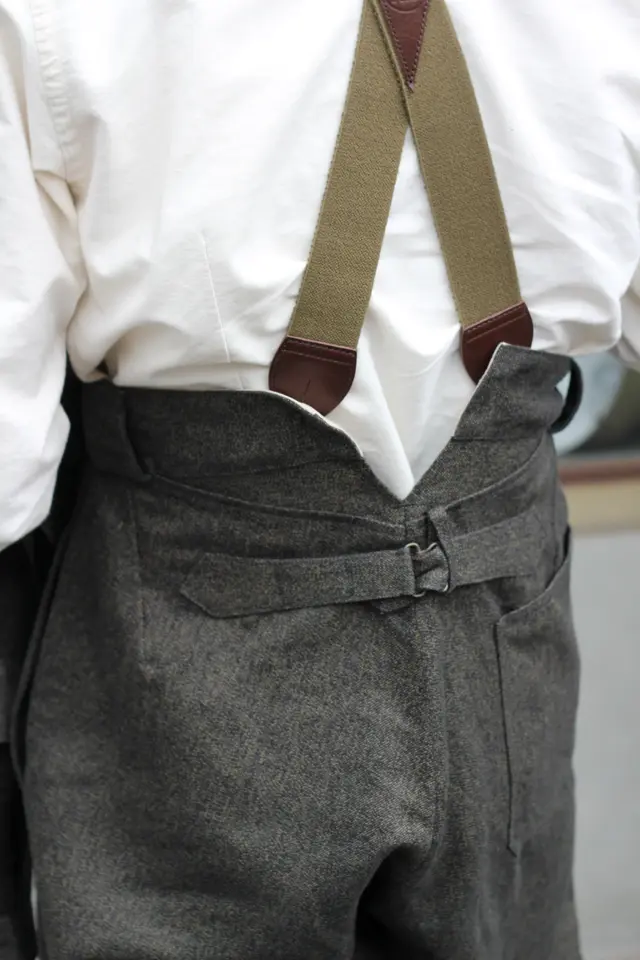
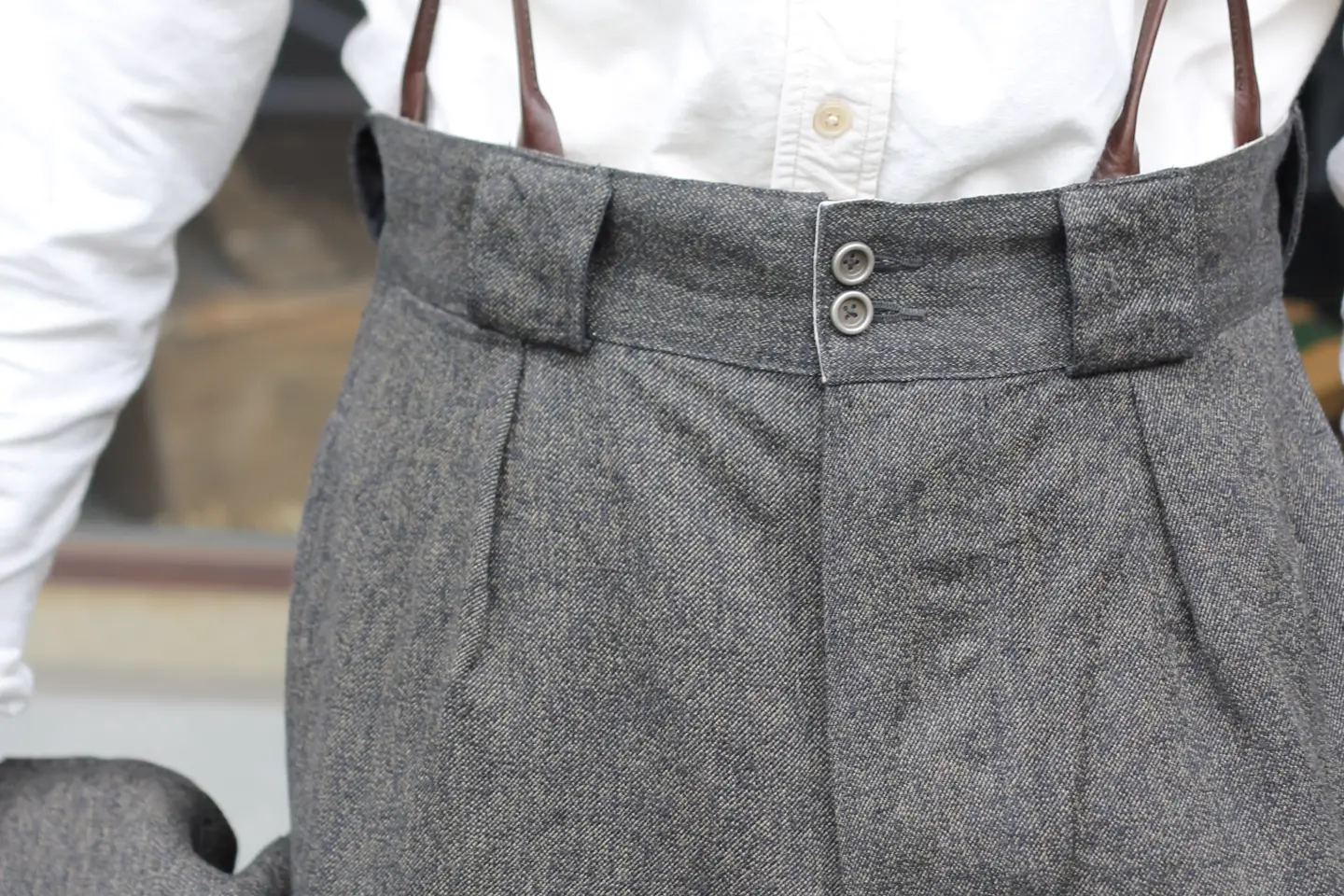
The "V-cut" design allows for unrestricted movement around the waist, even when sitting or squatting.
The cinch back provides a natural fit without the need for a belt or suspenders, a detail that has been devised for workers since ancient times and is carried over to the modern era. The decoration, reminiscent of classic metal buttons, evokes the feel of workwear from yesteryear, and combined with the understated look of the black chambray, this is a pair of trousers that combines sophistication with functional beauty.
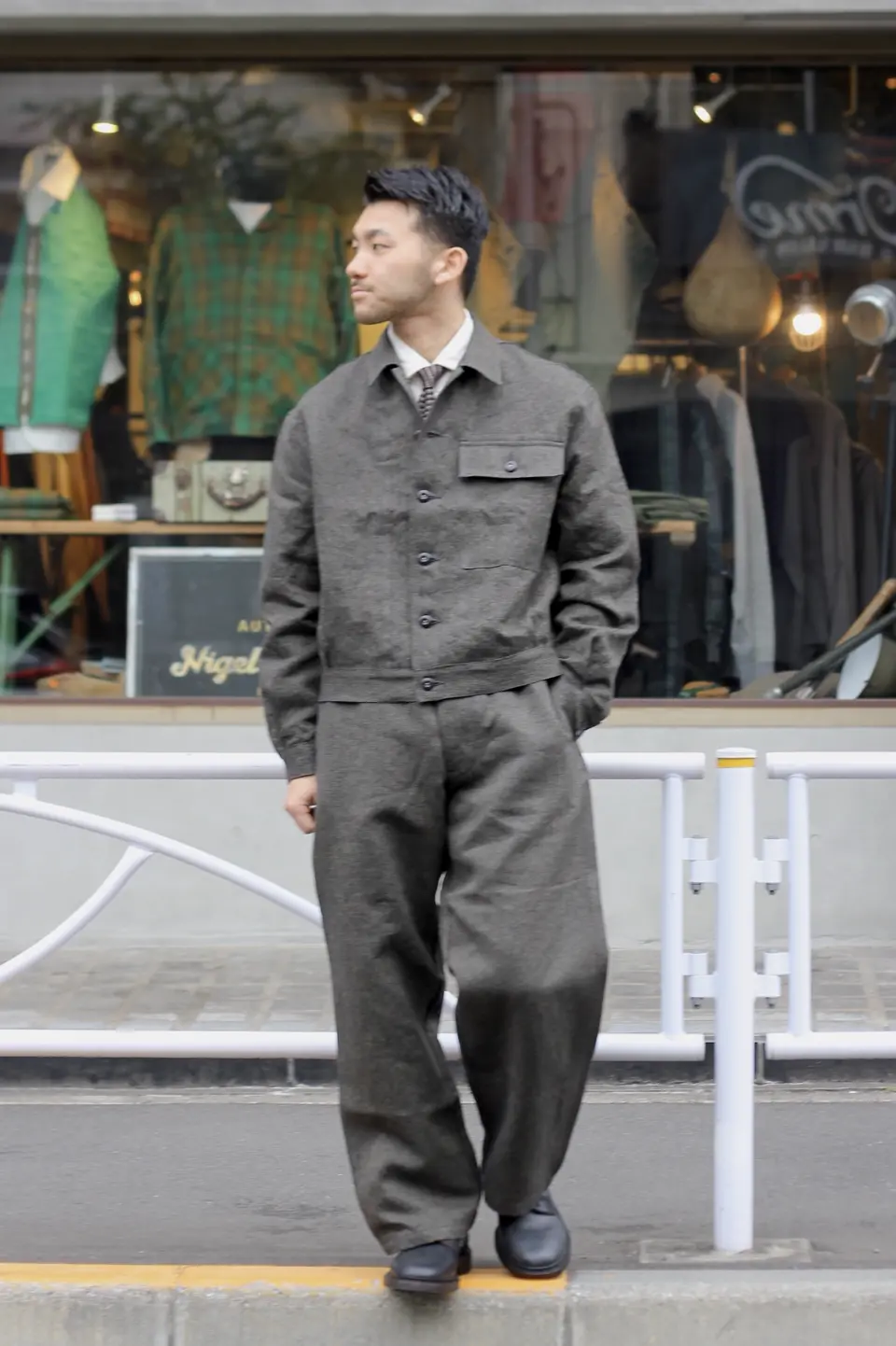
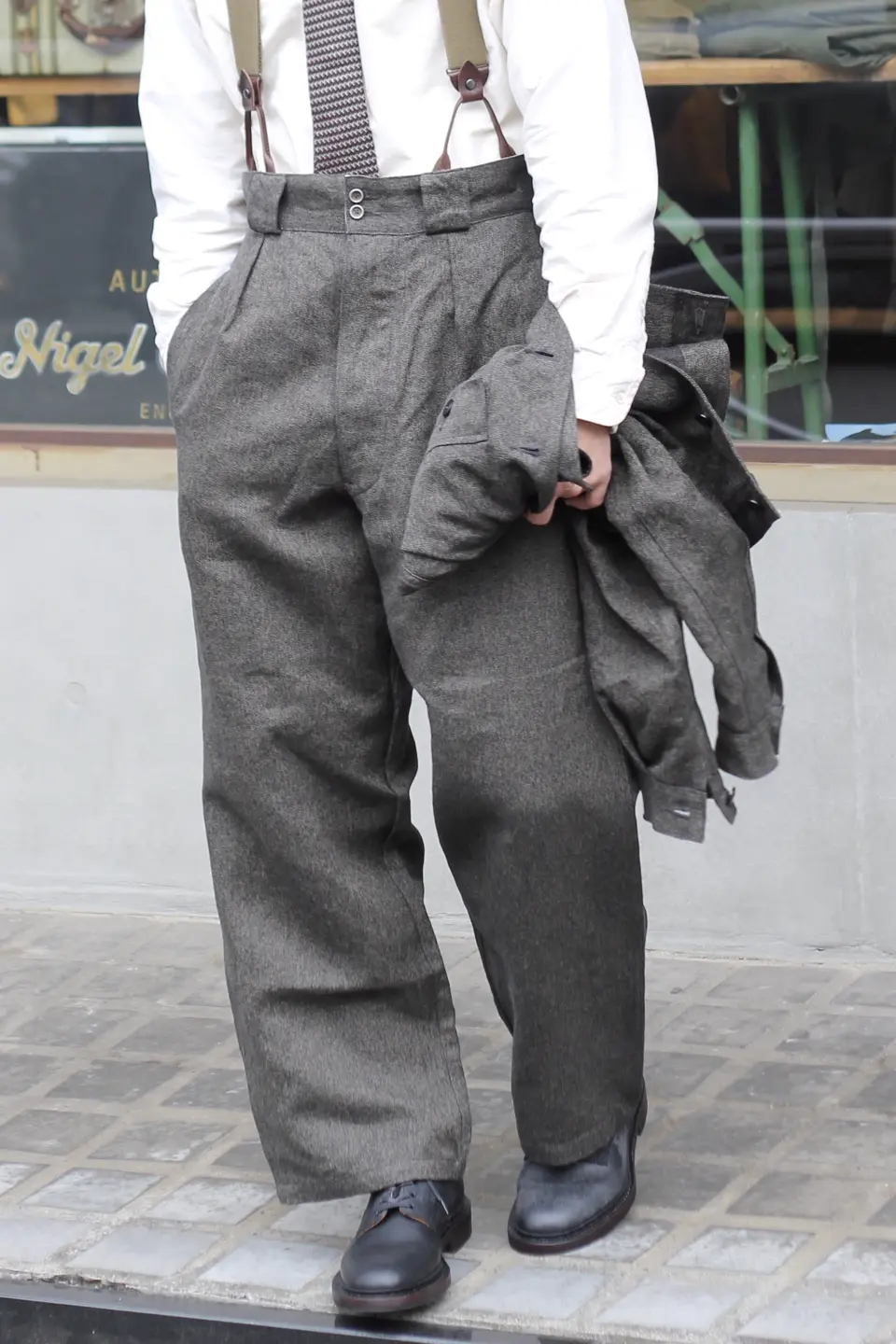
Model Wearing Size (Height: 173cm): JACKET: 48 PANT: 30
I wore them as a set, adding a touch of dressiness with a shirt and tie. The perfect sizing of these pants is immediately apparent the moment you put them on. The calculated volume and drape are perfected when you hang them up with suspenders. This silhouette, which cannot be achieved with a moderate width, sets these pants apart from others.
Please take a look at this black chambray made with Nigel Cabourn's unique recipe.
*They are already on sale in stores, but will be available on the online store from April 4th (Saturday).
We look forward to your visit and inquiries.
Yabiku
